If you live in Singapore, you've almost certainly seen it: grout lines that started off a clean white or grey, slowly turning grey, then brown, then black. It looks dirty no matter how hard you scrub. So what's actually going on — and is there a way to stop it for good?
The real reason grout goes black
Standard grout is made from cement, and cement is porous — it's full of tiny holes that soak up water like a sponge. In our climate, bathrooms stay warm and damp for hours after every shower. That combination of moisture, warmth and trapped soap residue is exactly what mould and mildew need to grow.
So the black you're seeing usually isn't dirt sitting on the surface. It's mould growing inside the grout itself. That's why scrubbing only helps for a day or two before it comes back — you're cleaning the surface, but the problem is underneath.
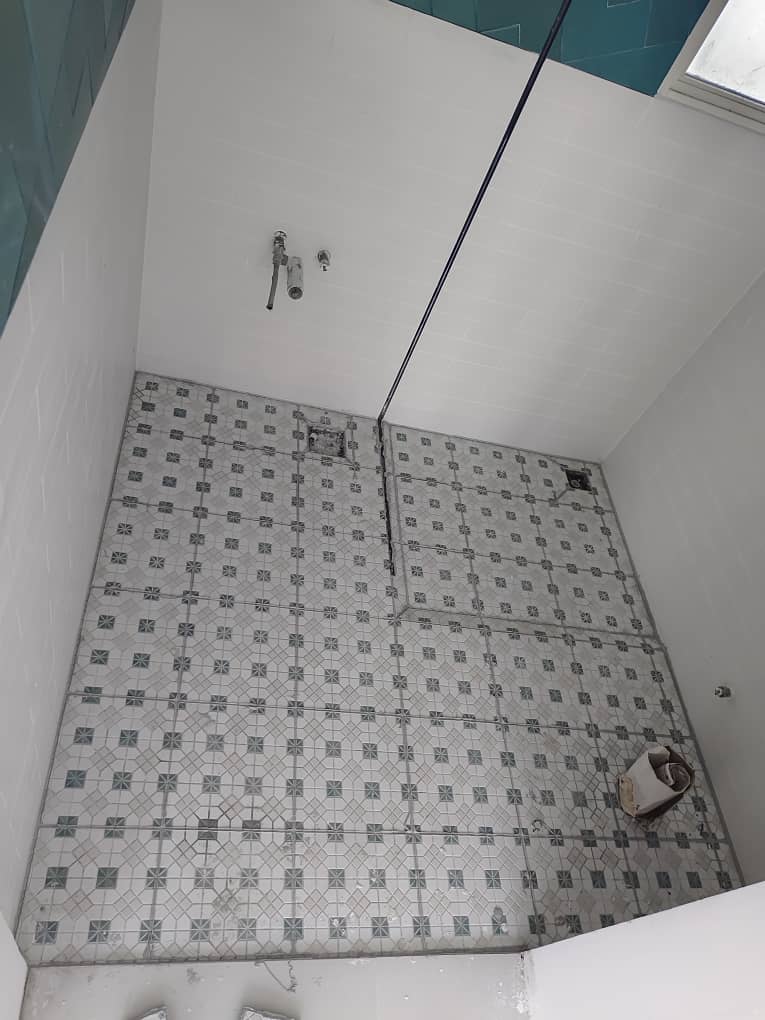
Old cement grout that's darkened and worn over time — the kind we remove and replace with epoxy.
Why cleaning never quite works
Most people cycle through the usual fixes:
- Bleach and a brush — kills surface mould briefly, but it can't reach the mould deep in the pores, and harsh bleach slowly breaks the grout down further.
- Grout pens — paint over the stain for a few weeks, then peel and flake once they meet water again.
- Steam cleaning — helps temporarily, but the porous grout just re-absorbs moisture and the mould returns.
The honest truth is that once cement grout is badly mouldy, you're managing the problem rather than solving it.
The fix that actually lasts: epoxy grout
The permanent answer is to replace the cement grout with epoxy grout. Instead of cement, it's made from epoxy resin, which is essentially non-porous. Water can't soak in, so mould has nothing to grow into. The lines stay the colour they were installed in — for years, with almost no scrubbing.
This is exactly what our epoxy grouting service does: we prep your existing lines, remove old grout where needed, and re-grout with a waterproof epoxy finish in a colour matched to your tiles. Most HDB and BTO bathrooms are done within a day.
Is it worth it?
If you're tired of a bathroom that looks dirty no matter how often you clean it, yes. You pay once for a proper job instead of buying cleaning products forever — and the bathroom simply looks finished again.
Frequently asked questions
Why does bathroom grout turn black in Singapore?
The black is usually mould growing inside the grout, not surface dirt. Cement grout is porous, and Singapore's warm, damp bathrooms let moisture and soap residue soak in, which is exactly what mould needs to grow.
Does bleaching or scrubbing remove black grout for good?
No. Bleach and scrubbing only clean the surface and kill mould briefly, but they can't reach the mould deep in the pores, so it returns within days. Harsh bleach can also break the grout down further over time.
How does epoxy grout stop grout from going black?
Epoxy grout is made from resin instead of cement, so it is essentially non-porous. Water can't soak in, which means mould has nothing to grow into, and the lines stay their original colour for years with almost no scrubbing.
How long does re-grouting a bathroom take?
Most HDB and BTO bathrooms are completed within a day. The existing lines are prepped, old grout is removed where needed, and the tiles are re-grouted with a waterproof epoxy finish matched to your tile colour.
Got black grout you're tired of scrubbing?
Send us a photo on WhatsApp and we'll tell you honestly whether epoxy re-grouting is the right fix — and what it'll cost.
Ask on WhatsApp